
Ready to Get Started?
Request an Appointment
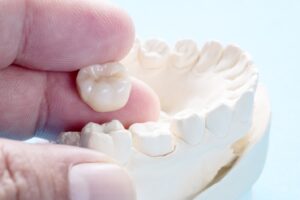
Dental crowns and fillings are two of the most popular restorative solutions available. Used for decades by dentists to repair broken and decayed teeth, they offer patients the chance to smile comfortably and confidently again without pain. As beneficial as they are, it can be hard to know which one you need when faced with a cavity or severely damaged tooth. Keep reading to discover their differences and how you can tell which one is essential to improve your smile.
What Are the Differences Between Dental Crowns & Dental Fillings?
Although dental crowns and fillings are restorative services designed to repair teeth, there are many differences between them, including:
- Purpose: Dental crowns are commonly used to cover a vulnerable tooth previously affected by severe decay or damage (i.e., a broken tooth). Dental fillings are used to repair cavity-stricken teeth.
- Tooth Removal: Dental fillings, especially if they are made of composite resin, allow you to keep more of your natural tooth structure; only the diseased area must be removed to avoid further harm. Dental crowns require the entire tooth to be altered to ensure the new restoration fits snugly and comfortably over the top when secured in place.
- Timeframe: Dental fillings require only a single visit to the dentist’s office; however, traditional dental crowns can take two appointments before you see results. If your dentist provides CEREC crowns, you can receive your new tooth covering on the same day.
- Longevity: Dental crowns, when properly taken care of, can last 15-20 years. Dental fillings can last a decade or more.
How Can You Know Whether You Need a Dental Crown or Filling?
The only way to know which restorative solution you need is to schedule a consultation with your dentist. They will examine your affected tooth and determine which option will lend the best results.
If it is a minor cavity that has not yet penetrated the dentin layer, a tooth-colored filling may be all you need to restore your smile and improve your oral health. If you have a deep cavity or severe damage that is causing your tooth to no longer be sturdy, a dental crown will be necessary.
After a full examination, your dentist will build a personalized plan that explains their approach and how they will repair and restore your smile.
With a well-crafted dental crown or tooth-colored filling, you can expect your smile to appear and feel healthier than before. Regardless of which solution your dentist chooses, you can expect great results.
About the Author
Dr. Win Bell earned his DDS at Virginia Commonwealth University before completing a one-year general practice residency in Burlington, Vermont. Now, with his own dental practice in Cary, he serves patients of all ages, providing a wide array of services, including dental fillings and crowns. If you have a decayed or damaged tooth that needs to be fixed, contact us at (919) 467–7360 to schedule an appointment.